

Capital Technology Group Blog
Capital Technology Group has been serving the Arkansas area since 1994, providing IT Support such as technical helpdesk support, computer support, and consulting to small and medium-sized businesses.
Protect Your Business Data from Public Wi-Fi Hackers

Connecting to a public Wi-Fi network is, at best, a roll of the dice, and more often than not, foolhardy and actively dangerous. Meant as a convenience, it is most convenient for someone trying to monitor your network traffic. These networks, maintained by a third party, are left wide open by design… making them in no way trustworthy, particularly for business purposes.
How Your Data Can Be Intercepted from an Insecure Network
Public Wi-Fi is, generally speaking, unencrypted. As a result, all of the data you send from your device to the router can be easily captured… which means it can be stolen, or manipulated.
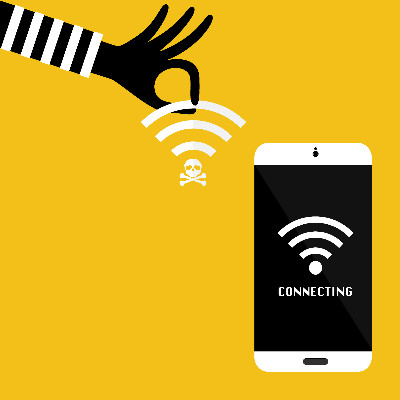
It isn’t hard, either. Basic hardware can be used to create a fraudulent network with an official-looking name. If an unfortunate user connects to that network, all of their data—logins, emails, private documents—is automatically routed through a stranger’s device.
Obviously, this is a very bad thing for a private user, but it can get exponentially worse for a business if one of its accounts is compromised.
Why It’s Worse for Business Users
Unfortunately, we have to consider scale when making this determination. If a personal account were to fall into this trap, one person's information would suddenly be stolen. However, if a business account were compromised, the ramifications could affect the whole organization.
How so?
- By logging into a work profile via an insecure network, an attacker could harvest credentials by scraping usernames and passwords.
- Alternatively, an attack could take the form of a fraudulent login page that intercepts the target on its way to a legitimate destination and steals information directly.
- Finally, attackers can introduce various types of malware to additional victims on the network via one that is already infected, without any interaction from the other user.
Obviously, none of these outcomes is desirable.
How to Keep Your Company Secure
You want your team to be empowered, but you obviously need to enable this while avoiding any additional risks. Productivity can’t come at the expense of your control over your company data.
These steps help you strike the balance between the two needs:
- Utilize Virtual Private Networking - A VPN creates an encrypted connection between your device and its destination. As a result, anyone trying to sneak a peek in transit sees only gibberish.
- Utilize Cellular Hotspots - Comparatively, a mobile phone’s data connection far outpaces a public Wi-Fi connection in terms of security. As such, it is wiser for your team to use their mobile device’s hotspot while they work.
- Utilizing Multi-Factor Authentication - MFA, or the use of more than one factor to prove a user’s identity to be legitimate, is now essential to protecting login access. Even if a password is captured over a public network, the perpetrator will still lack the second form of verification… ideally, a biometric pattern or a hardware device.
Securing Your Business and Its Infrastructure is Critical
Account security—especially if remote operations are in play—is a serious consideration, and is no small feat to manage. It is also necessary, as a protected business can confidently be a productive business.
For assistance in making sure your technology is configured to be both protected and productive, we’re always here. Call (501) 375-1111 to learn more about our services.
About the author
Mobile? Grab this Article
Comments