

Capital Technology Group Blog
Capital Technology Group has been serving the Arkansas area since 1994, providing IT Support such as technical helpdesk support, computer support, and consulting to small and medium-sized businesses.
What Would Happen if Your Server Died Right Now?

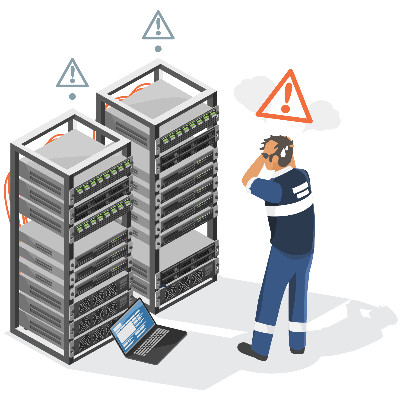
When a central server fails, daily business operations grind to an immediate halt. Most business owners take comfort in knowing a nightly backup runs in the background. However, having raw files saved on an offsite drive is only half of the equation when unexpected downtime strikes your network.
Data Preservation Is Not Operational Recovery
There is a fundamental difference between preserving data and keeping a business running.
If a server motherboard burns out on a Tuesday morning, your raw files might rest safely in a cloud repository. That is good for data integrity, but raw files cannot process invoices, manage active inventory, or run line-of-business applications on their own.
To restore regular operations from a standard file backup, an engineer must source replacement hardware, reinstall the operating system, configure network parameters, reinstall every software license, and download the stored files over the internet. That process routinely consumes two to three business days.
During those three days, staff members sit idle while payroll continues to run. Clients call with urgent inquiries, and no one can access historical accounts. The true cost of a server failure is rarely the price of replacing the physical chassis. The real cost is the lost revenue, compromised productivity, and eroded client trust that accumulate while you wait for a total system rebuild.
Measuring Your Recovery Metrics
Evaluating disaster preparedness requires examining two specific metrics: how much data you can afford to lose, and how long you can afford to remain dark.
If your backup runs once per day at midnight and the server fails at 11 p.m., a full day of work disappears. Does your team have the bandwidth to manually re-key a full day of transactional data? For some businesses, re-entering invoices is a minor annoyance. For others, it is an operational failure.
If your current disaster strategy relies on pulling terabytes of data over a standard broadband line onto an unconfigured machine, your recovery timeline is measured in days. That is an unacceptable risk.
Moving From Simple Backups to Business Continuity
Modern business continuity bypasses traditional file-by-file restoration. Instead of copying isolated documents, an image-based backup system captures complete, ongoing snapshots of your entire server infrastructure, including the operating system, configuration settings, software applications, and stored data.
When physical hardware fails, an image-based snapshot can be virtualized immediately, either on a local appliance or in a secure cloud environment. Your team logs back in and resumes work within minutes while hardware repairs proceed in the background.
Your clients never notice a disruption.
Securing Your Uptime
Achieving operational resilience does not require you to master systems engineering. It simply requires knowing how long your business can realistically survive a hard stop, and whether your current infrastructure can meet that timeline.
At Capital Technology Group, we help organizations design continuity strategies that safeguard both critical data and operational uptime. To evaluate your current server recovery timeline and eliminate hidden downtime risks, contact us at (501) 375-1111.
About the author
Mobile? Grab this Article
Comments